Trying to choose between Encino and LA’s Westside? For many buyers, this is less about picking a “better” neighborhood and more about deciding what matters most in daily life. If you are weighing price, home size, lot space, and commute convenience, this side-by-side guide will help you compare the tradeoffs more clearly. Let’s dive in.
Price Differences Matter
If price is one of your first filters, Encino often stands out as the more attainable option when compared with the broader Westside. In February 2026, Encino’s median sale price was $1,517,500, while the broad Westside median was $2,300,000, according to Redfin’s Encino market snapshot.
That gap is meaningful, but it does not tell the whole story. Some Westside neighborhoods sit much higher, including Brentwood at $2,650,000 and Pacific Palisades at $3,499,250, while others are closer to Encino than many buyers expect, including Santa Monica at $1,824,000, Westwood at $1,857,500, and Mar Vista at $1,995,000.
The practical takeaway is simple: Encino is usually less expensive than the broad Westside average, but not always dramatically less than every Westside pocket. If your budget could stretch to an Encino single-family home, it may also open the door to a smaller house, condo, or townhome on parts of the Westside.
Home Types Feel Different
One of the biggest differences between buying in Encino versus the Westside is the housing stock itself. Your budget may buy a very different kind of property depending on which side of the hill you choose.
Encino Homes and Lots
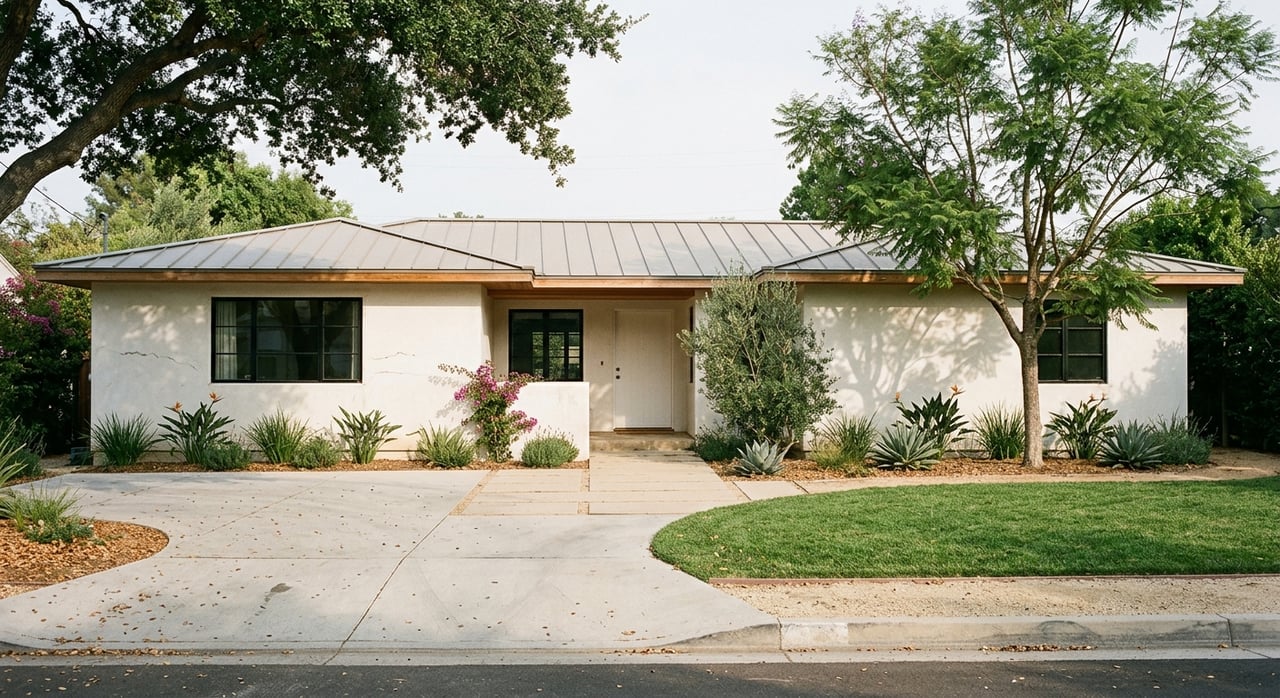
The City of Los Angeles Encino-Tarzana survey describes Encino as predominantly single-family, with large stretches of Ranch-style homes. It notes that the flatter areas adjacent to and north of Ventura Boulevard tend to have modest single-family subdivisions on regularly sized lots, while the hills south of Ventura often feature larger homes on more spacious, irregular lots.
The same survey identifies a broad mix of architectural styles, including American Colonial Revival, Tudor Revival, Mid-Century Modern, Custom Traditional Ranch, Late Modern, and Late Hollywood Regency. In day-to-day terms, Encino often feels more consistently suburban in form, especially if you are looking for detached homes and more yard space.
Westside Housing Mix
The Westside offers more variety from one pocket to the next. According to the West Los Angeles survey report, many single-family areas were developed with deep lots, consistent setbacks, tree-lined streets, and ornamental streetlights.
At the same time, the Westwood Community Plan shows a much denser and more mixed residential pattern in certain areas. Single-family uses account for 70 percent of residential acreage in Westwood but only 16 percent of housing units, while 84 percent of housing units are in multiple-dwelling neighborhoods.
That means the Westside can offer:
- Estate-like single-family areas in places such as Brentwood and Pacific Palisades
- Classic suburban-style streets in select pockets
- Low-rise multifamily housing near major job centers
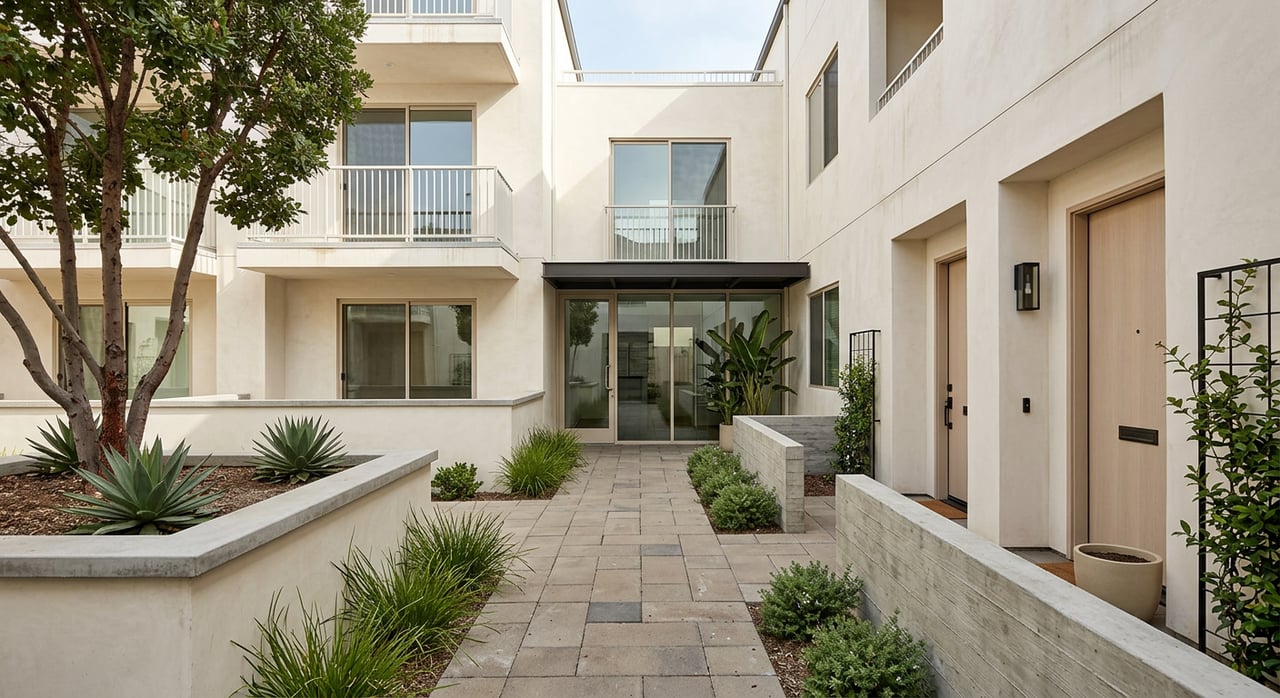
- Condos and townhomes that may align with buyers prioritizing location over lot size
Lot Size and Space Expectations
If your priority is more indoor and outdoor space for the money, Encino is often the easier starting point. The city survey supports Encino’s reputation for lot-forward, single-family housing, especially in its flatter Ranch-style sections.
That said, the Westside is not one-size-fits-all. Brentwood and Pacific Palisades also include generously sized lots, and in some areas homes sit on very large parcels. But in neighborhoods such as Westwood and Santa Monica, the residential pattern can be more density-driven, which may mean smaller lots or attached housing depending on where you look.
A helpful way to think about it is this: Encino more often delivers consistency if you want a suburban single-family layout, while the Westside offers a wider range of choices, from estate lots to condos.
Commute and Transit Can Tip the Scale
For many buyers, the biggest deciding factor is not price or architecture. It is the reality of getting where you need to go each day.
Encino Commute Patterns
Encino has strong freeway access and good regional connectivity. The Westwood Community Plan and Encino planning materials note the importance of the 101 and 405 in connecting the Valley to downtown Los Angeles and Westside business districts.
Still, the 405 corridor is known for congestion. Metro’s Sepulveda Transit Corridor project information highlights the I-405 as one of the region’s most heavily traveled and congested corridors, which helps explain why a cross-hill commute from Encino can feel more freeway-dependent.
Encino also has access to the G Line at Balboa, but that service runs between Chatsworth, Canoga Park, and North Hollywood rather than directly into the Westside. If your daily routine is centered in the Valley, this may work well. If it is centered on Century City, Santa Monica, or UCLA, the tradeoff may feel different.
Westside Transit Advantage
The Westside generally offers more non-car commuting options. The West Los Angeles survey report points to major freeway access and proximity to major employment centers, while Metro service adds another layer of convenience.
The E Line already connects east-west service to Santa Monica, and Metro reports that D Line Extension Section 1 is scheduled to open on May 8, 2026, with Century City and Westwood sections planned later in 2026 and 2027. Metro Micro also serves the UCLA, Westwood, and VA Medical Center area.
In practical terms, the Westside usually makes more sense if your work and lifestyle are centered on Century City, Westwood, Santa Monica, or UCLA. Encino often makes more sense if you want more house and yard space and do not mind a more freeway-oriented routine.
Which Buyers Usually Prefer Encino
Encino tends to be a strong fit if you are looking for:
- A detached single-family home as the main goal
- More lot space and a more suburban block pattern
- Ranch-style housing or a classic Valley residential feel
- A budget that stretches further than it might on much of the Westside
- Daily routines that are more Valley-focused than coastal-focused
For many upsizers, relocators, and buyers who want space to spread out, Encino can feel like a practical move without leaving Los Angeles.
Which Buyers Usually Prefer the Westside
The Westside is often a better fit if you value:
- Closer access to Century City, Westwood, Santa Monica, or UCLA
- More transit choices beyond freeway driving
- A broader housing mix, including condos, townhomes, and multifamily options
- Coastal-adjacent location and Westside lifestyle convenience
- The ability to choose between urban, low-rise, or estate-style pockets depending on your budget
For some buyers, the location itself is the upgrade. Even if that means giving up square footage or lot size, the shorter commute and neighborhood access can be worth it.
Tour Both Before You Decide
If your budget gives you a real choice between Encino and parts of the Westside, it is smart to tour both. On paper, the comparison may look like price alone, but in person the decision usually comes down to how you weigh home size, yard space, commute friction, and neighborhood form.
A buyer comparing Encino to Brentwood or Pacific Palisades may see a major pricing gap. A buyer comparing Encino to select opportunities in Santa Monica, Westwood, or Mar Vista may find the decision is more nuanced. What matters most is how each option fits your routine, not just your search filter.
If you want help comparing Westside opportunities against Encino with a clear view of pricing, property type, and daily lifestyle tradeoffs, Steven Kirshbaum can help you evaluate the options with local market insight and a hands-on approach.
FAQs
Is Encino cheaper than LA’s Westside for homebuyers?
- Usually, yes. Encino’s median sale price was $1,517,500 in February 2026 versus the broad Westside median of $2,300,000, though some Westside neighborhoods are closer in price than buyers expect.
Are lot sizes bigger in Encino or on the Westside?
- Encino often has bigger-lot expectations, especially in its flatter Ranch-style sections, while some Westside areas such as Brentwood and Pacific Palisades also have large lots and others are more density-focused.
Is Encino or the Westside better for commuting to Century City or Santa Monica?
- The Westside is generally easier for commuting to Century City, Santa Monica, Westwood, and UCLA because it offers stronger location advantages and more transit options.
Does the Westside have more condos and townhomes than Encino?
- Yes. Westside planning documents support a broader housing mix that can include condos, townhomes, low-rise multifamily housing, and high-rise residential buildings in some areas.
Should buyers tour Encino and the Westside in the same search?
- Yes, if your budget can reasonably reach properties in both areas. The real comparison is often not just price, but the balance between location, lot size, home type, and commute.