If you love the idea of walking to the beach, biking to errands, and using transit when you need it, Venice can make that lifestyle feel very real. At the same time, it helps to know what “car-light” actually looks like here, because Venice is not a rail-first neighborhood. This guide breaks down how daily life in Venice Beach can work with less driving, where the neighborhood supports that routine best, and what tradeoffs to expect before you buy. Let’s dive in.
What car-light living means in Venice
In Venice, car-light living usually means relying on a mix of walking, biking, bus service, and occasional microtransit instead of using a car for every trip. City Planning notes that Venice is not conveniently located along major Metro stations, so the neighborhood functions more as a multi-modal coastal area than a rail-centered one.
That distinction matters if you are thinking about moving here. Venice can be a strong fit if you want many daily needs and lifestyle stops within walking or biking distance, but longer trips often take more planning. In other words, Venice supports fewer car trips well, even if it does not work like a fully car-free downtown neighborhood.
Walkable pockets shape daily life
One of Venice’s biggest strengths is how much of daily life can happen close to home. The beach core is anchored by Ocean Front Walk and the Venice Beach Recreation Center at 1800 Ocean Front Walk, where city facilities include Muscle Beach, the skate park, the fishing pier, children’s play areas, sand volleyball, pickleball, and surfing programs.
That concentration of activity helps create a routine where recreation, fresh air, and casual meetups are built into the neighborhood. If you are someone who values being able to step outside and immediately connect to public spaces, Venice offers a strong foundation for that kind of lifestyle.
City planning documents also identify Abbot Kinney Boulevard as Venice’s historic commercial center. Current policy work recommends pedestrian-friendly improvements on Rose Avenue, Abbot Kinney Boulevard, Venice Boulevard, and Washington Boulevard, which reflects how central these corridors are to getting around on foot.
Venice also has historic walk streets in areas such as Milwood, North Venice, Marina Peninsula, and Ballona Lagoon. These are part of the neighborhood’s pedestrian-scale fabric and help explain why some parts of Venice feel especially suited to a slower, more local rhythm.
Biking is a major advantage in Venice
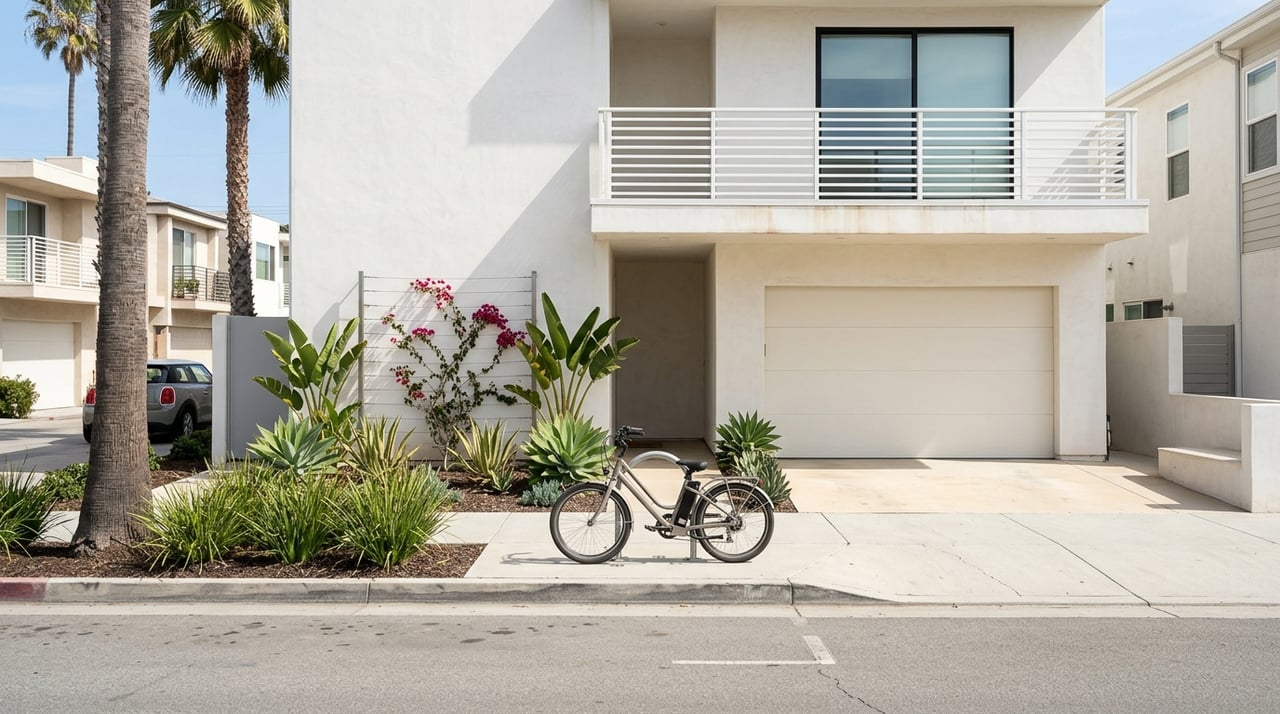
If you want to live with less driving in Venice, biking may be your biggest tool. The neighborhood has several useful and scenic routes that support both quick errands and longer rides.
Metro Bike Share highlights a 2.8-mile Venice Beach Bike Path loop that is flat and off-street. Along the route, you pass places like Venice Skate Park, the Public Art Wall, Muscle Beach, and the boardwalk, which makes it practical for short local trips and enjoyable enough to become part of your routine.
Another helpful route is the 2.5-mile Venice & Abbot Kinney guide. It is mostly flat, includes bike lanes, and links Venice & Lincoln Station to Venice & Abbot Kinney Station while passing the Venice Farmers’ Market, the Venice Sign, and the Abbot Kinney shopping and dining district.
That matters because car-light living works best when errands can be bundled together. In Venice, a short ride can connect groceries, coffee, library stops, beach time, and everyday services without needing to get behind the wheel.
Bike share adds flexibility
Bike ownership is not the only option. Metro Bike Share operates 24/7 on the Westside, which gives Venice residents and visitors a practical way to handle short trips and first-mile or last-mile connections.
For some buyers, that flexibility is a real plus. You may not want the commitment of storing and maintaining a bike, especially in a smaller condo or townhome, but you still want the option to move through the neighborhood quickly.
Bike share can also help fill the gap between bus routes, local destinations, and the beach. In a place like Venice, where many short trips are flat and manageable, that can make a noticeable difference in how often you choose not to drive.
Longer rides connect Venice to more of the Westside
Venice’s bike network is also useful beyond the immediate neighborhood. The Ballona Creek Bike Path runs 13.4 miles between Marina del Rey and Culver City, with Lincoln Boulevard listed as one of the access points.
For buyers who work elsewhere on the Westside or simply want a broader car-light radius, this connection expands what is possible. Metro’s Pedal to the Playa route also starts near Venice & Abbot Kinney before connecting to the Ballona Creek path and continuing toward the Culver Boulevard area.
This does not replace every car trip, of course. But it does mean Venice offers more than a small beach bubble, especially if you are comfortable using a bike for transportation rather than just recreation.
Bus service does the heavy lifting
Because Venice is not centered on major rail stations, buses play an important role in daily mobility. City planning documents say Venice relies on local bus lines from Metro, Big Blue Bus, Culver CityBus, and LADOT Commuter Express, especially along Lincoln, Venice, Washington, Abbot Kinney, Main and Windward, 7th and California, Walgrove, and Pacific.
That street-level coverage is one of the reasons a car-light routine can still work here. You may not have rail at your doorstep, but you do have multiple bus corridors serving the neighborhood and connecting to surrounding parts of the Westside.
Some key lines include Metro Line 33 along Venice Boulevard, Big Blue Bus Route 1 on Main Street and Santa Monica Boulevard, Route 3 on Lincoln Boulevard, and Route 8 on Ocean Park Boulevard. For many residents, these routes are part of the practical day-to-day system that supports commuting, errands, and social plans.
Rail access is possible, but indirect
This is where expectations matter most. If you are hoping for easy walk-to-train living, Venice may not match that vision.
For rail access, residents typically connect to the E Line at Downtown Santa Monica Station. Metro lists that station as serving the E Line along with local bus service, which makes it a common transfer point for longer regional trips.
In practical terms, that means rail is still part of the picture, but usually not the first step from your front door. You often need a bus, bike, or another local connection before you reach the train.
Microtransit helps bridge short gaps
LADOT’s LAnow microtransit currently serves Venice, Mar Vista, Palms, and Del Rey. According to LADOT, pickup and drop-off points are generally within a quarter-mile of riders.
For a car-light lifestyle, that can be useful in the spaces between walking, biking, and bus service. It may help on days when you have bags to carry, want a simpler local connection, or need something more flexible than a fixed route.
Microtransit is not the backbone of getting around Venice, but it can be a helpful support layer. For some households, those backup options are what make fewer-car living feel more realistic.
Everyday amenities make the lifestyle stick
A car-light neighborhood works best when your routine destinations are nearby. Venice has several amenities that support that pattern.
The Venice-Abbot Kinney Memorial Branch Library at 501 S. Venice Blvd. offers a bike rack, Wi-Fi, public computers, and a regular weekly program schedule. That may sound simple, but access to useful public spaces within walking or biking distance can make a neighborhood feel much more livable day to day.
The Venice Farmers Market near 500 Venice Blvd. is another recurring neighborhood anchor. It also appears on Metro’s local ride guide, reinforcing how central it is to the kind of combined errand-and-leisure trips that support a car-light routine.
Metro’s Venice & Abbot Kinney guide also points to destinations like Venice of America Centennial Park, the Venice Sign, Artists and Fleas, and the Abbot Kinney retail and dining district. Together, these show how many stops can fit into one short outing.
Venice Boulevard improvements support safer trips
On the broader Venice Boulevard corridor, LADOT and Metro completed more than 4 miles of safety and mobility improvements. These upgrades include crosswalks, signal improvements, parking-protected bike lanes, and a dedicated 24-hour bus lane.
For buyers thinking long term, this is the kind of infrastructure that matters. Car-light living becomes more practical when streets are designed to support safer crossings, more reliable bus movement, and better bike access.
It also signals an ongoing effort to improve how people move through this part of Los Angeles. In a neighborhood like Venice, where many people use multiple transportation modes in the same week, those changes can have real daily value.
Who Venice fits best
Venice is a strong match if you want a lifestyle built around local access rather than rail access. If your ideal day includes walking to public spaces, biking short distances, using bus service on key corridors, and saving your car for selected trips, Venice can offer a very appealing setup.
It may be especially attractive if you are comparing coastal neighborhoods and care about the balance between activity, convenience, and neighborhood character. The ability to combine recreation, errands, and social stops into one walk or ride is one of Venice’s clearest strengths.
At the same time, Venice is usually best described as car-light, not fully car-free. If your work, family, or routine requires frequent cross-city travel on a tight schedule, the lack of direct major rail access is important to weigh carefully.
What to think about before you buy
Before you buy in Venice, it helps to think beyond the home itself and consider how you actually move through your week. The right location for you may depend on how close you want to be to bus corridors, bike-friendly streets, commercial pockets, or the beach core.
You should also think about whether your version of convenience means walkable daily errands, easier bike access, or smoother transit connections. In Venice, those priorities can shape which blocks and property types feel like the best fit.
That is where local guidance matters. A neighborhood can look highly walkable on paper, but your experience may differ depending on your routine, your commute, and which part of Venice you choose.
If you are weighing a move and want a realistic picture of how Venice supports a car-light lifestyle, working with someone who understands the neighborhood block by block can save time and help you focus on the right opportunities. If you are exploring Venice Beach homes, condos, townhomes, or investment properties, connect with Steven Kirshbaum for thoughtful, local guidance.
FAQs
Is Venice Beach a good place for car-light living?
- Yes. Official planning and transportation sources suggest Venice is a strong fit for car-light living built around walking, biking, buses, bike share, and occasional microtransit, though it is not considered rail-centric.
Is Venice Beach a car-free neighborhood?
- Not usually. Venice supports fewer car trips well, but longer commutes often require a bus, bike, or a connection to the E Line in Santa Monica.
What transit options serve Venice Beach?
- Venice relies on local bus lines from Metro, Big Blue Bus, Culver CityBus, and LADOT Commuter Express, with key service on streets such as Lincoln, Venice, Washington, Abbot Kinney, Main and Windward, Walgrove, and Pacific.
How bike-friendly is Venice Beach for daily errands?
- Venice has several useful bike routes, including the flat Venice Beach Bike Path loop and the mostly flat Venice & Abbot Kinney route with bike lanes, making short local trips more practical.
Can Venice Beach residents reach Metro rail easily?
- Rail access is possible, but usually indirect. Many residents connect first by bus or bike to Downtown Santa Monica Station to access the E Line.
What local places support a car-light lifestyle in Venice Beach?
- Key everyday destinations include Ocean Front Walk, the Venice Beach Recreation Center, the Venice-Abbot Kinney Memorial Branch Library, the Venice Farmers Market, and the Abbot Kinney area.