Thinking about adding a backyard home in Brentwood? You are not alone. Across the Westside, accessory dwelling units are helping homeowners create flexible space for family, generate rental income, and future-proof their properties. You want clear steps, realistic expectations, and local know-how before you commit. This guide breaks down what counts as an ADU, how approvals work in Los Angeles, what to watch for in Brentwood, and how an ADU can affect resale and rent potential. Let’s dive in.
Why ADUs are booming on the Westside
In high-cost neighborhoods like Brentwood, an ADU can solve several needs at once. Many owners build for multigenerational living so parents, adult children, or caregivers can stay close while keeping privacy. Others use ADUs to create steady long-term rental income that helps offset a mortgage or property taxes.
The Westside’s lot patterns and lifestyle add to the appeal. Single-family parcels with backyards and detached garages make conversions or modest new builds feasible. At the same time, strong rental demand means a well-built, permitted ADU can attract qualified long-term tenants. The result is flexibility you can use now and value you can carry into a future sale.
ADUs and JADUs, in plain English
Before you plan, get the basics right.
- Accessory Dwelling Unit (ADU): A separate residential unit on the same lot as your main home. It can be detached in the backyard, attached to the house, or created by converting existing space.
- Junior ADU (JADU): A smaller unit carved out from the existing home, often from a bedroom or interior area. JADUs are typically limited in size and often come with stricter owner-occupancy rules.
Common formats in Brentwood include garage conversions, backyard detached cottages, attached additions, and interior conversions. JADUs appeal when you want a simpler, lower-cost path that stays inside the existing footprint.
The rules that smooth the path
California law has made ADUs more accessible by limiting local barriers and requiring ministerial approvals when projects meet objective standards. In plain terms, if your plans comply with the rules, the city must process them without discretionary review.
- Ministerial approvals: State law requires local agencies to act on a complete ADU application within a statutory window, commonly around 60 days. Check current Los Angeles Department of Building and Safety timelines for your project.
- Size and design: The state sets upper bounds for ADU sizes and allows cities to apply objective standards within those limits. JADUs are usually capped at 500 square feet, and ADUs are commonly allowed up to 1,200 square feet under model limits, subject to local standards.
- Parking: Many ADUs do not require new parking. If your property is within a half-mile of public transit or you convert existing space, state rules often restrict parking mandates. Many Westside properties qualify for exemptions.
- Fees: State rules limit impact fees on smaller ADUs. You will still see local plan-check and permit fees. Always verify current fee schedules and whether size thresholds affect your total.
- Ownership and rentals: Owner-occupancy is generally not required for ADUs under the current framework, while JADUs often do require it. Long-term renting is allowed, subject to local rental laws. Short-term rental use may be limited by city rules or HOA documents.
Brentwood permitting: what to check first
Brentwood is within the City of Los Angeles, so you will work with Los Angeles City Planning and the Los Angeles Department of Building and Safety. The city provides ADU checklists, plan-submittal guidance, and, in some cases, access to pre-approved plan sets that can help streamline plan check.
Start with parcel-specific due diligence:
- Zoning and overlays: Use Los Angeles City Planning’s zoning lookup tools to confirm your zoning, residential category, and whether you are in a hillside or special overlay area. Hillside parcels and geologically sensitive sites can trigger additional geotechnical reports, grading rules, and design standards.
- Historic status: If your property sits within a Historic Preservation Overlay Zone or has a historic designation, expect extra review steps.
- HOA and CC&Rs: State law limits HOAs from banning ADUs outright, but they can apply reasonable restrictions. Review your CC&Rs carefully and consult your HOA if applicable.
- Utilities: Confirm water, sewer, and power needs early. Coordinate with the relevant city departments to understand connection points, capacity, and service upgrades.
Step-by-step permit path
- Pre-check: Confirm zoning, overlays, and any hillside or historic triggers. Pull your property’s permit history to see if prior work needs correction.
- Design and plans: Engage a designer or architect familiar with ADUs. Prepare structural, energy, and site plans that meet objective standards.
- Submittal: File your application and plans. Ask about any pre-approved plan options that might fit your site and speed review.
- Plan check: Respond quickly to corrections. Ministerial reviews aim to stay within statutory timelines once your application is complete.
- Inspections: Expect standard inspections, including foundation, framing, electrical, plumbing, and final.
- Final occupancy: Once you pass all inspections, secure final sign-off to legally rent or occupy the unit.
Popular ADU formats in Brentwood
- Garage conversions: Common on lots with detached garages. These projects can be cost-effective because the shell exists, though code upgrades are often required.
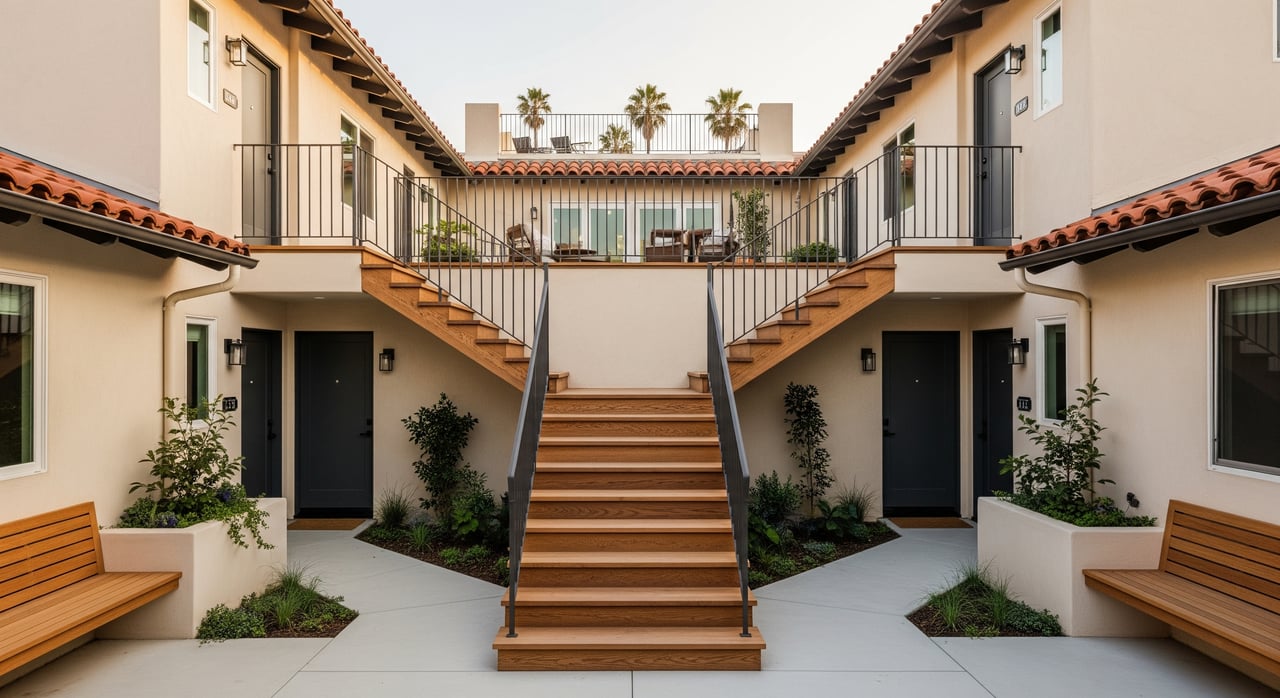
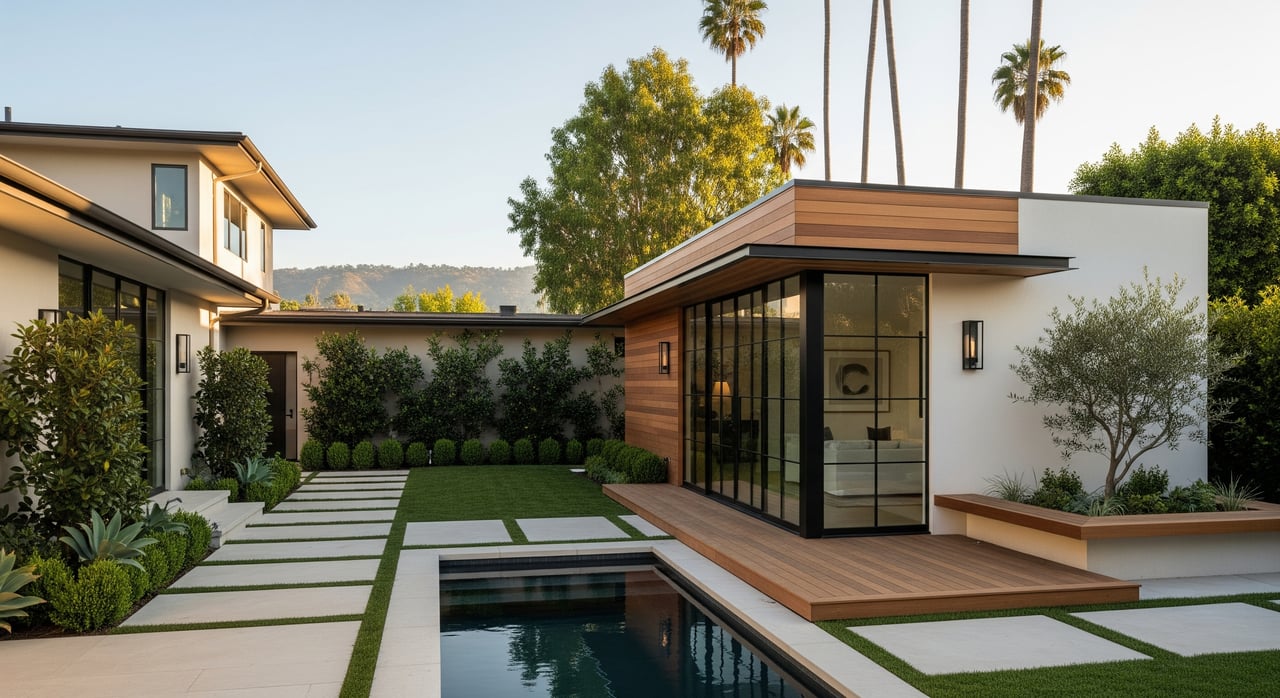
- Detached backyard ADUs: Ideal on larger lots where privacy and outdoor space matter. These units provide the most separation from the main home.
- Attached additions: Useful when lot coverage or setbacks make detached placement tight.
- Interior conversions and JADUs: Best for minimal site work and shorter build timelines. A good fit when you want a studio or one-bedroom within the existing footprint.
Costs and financing: what drives your budget
ADU budgets vary widely. Focus on the drivers you can control, and build a cushion for the ones you cannot.
- Project type: Interior and garage conversions generally cost less than detached builds because they need less foundation work and utility runs.
- Site conditions: Hillside grading, limited access, and long utility runs increase costs and timelines.
- Code upgrades: Older systems may need upgrades to meet current codes, especially electrical, plumbing, or seismic.
- Design and finishes: Higher-end finishes can boost rental and resale appeal but raise cost.
Financing options include cash, home equity lines or loans, cash-out refinances, and construction loans that convert to permanent financing. Some lenders will consider projected ADU rental income under specific rules. Policies vary, so speak with your lender early and ask about documentation.
Pro tip: Get multiple competitive bids from contractors with Westside ADU experience. Request line-item estimates and recent references for similar projects in Brentwood or nearby neighborhoods.
Renting an ADU on the Westside
Long-term rental use is common and can produce meaningful income in high-demand areas. If you plan to rent, build with durable finishes, privacy in mind, and separate entries where possible. Make sure you understand local rental rules, including tenant protections and registration where applicable. Short-term rental use may be restricted, so verify city rules and any HOA policies before you host.
Buying or selling a home with an ADU
ADUs can be a powerful differentiator when you sell and a smart value-add when you buy, but details matter.
- Permits and disclosure: Permitted status is essential. Unpermitted ADUs are a major resale risk. They can delay or derail a sale, trigger costly retroactive permitting, or require removal. Always verify permit records.
- Appraisal and value: Appraisers evaluate ADUs based on quality, permitted status, and local comparables. Some rely on income data if rental comps are clear. Expect variability in how much value is assigned.
- Property taxes: New construction typically triggers reassessment of the added improvements. Contact the Los Angeles County Assessor for guidance on how your ADU could affect your assessment.
- Insurance: Adding an ADU can change coverage needs. If you plan to rent, consider landlord coverage.
If you are purchasing a home with an existing ADU, confirm permit status in escrow, review construction records, and evaluate rental potential based on condition and privacy. If you plan to build after purchase, run the zoning and overlay checks during your due diligence period.
Action checklist for Brentwood homeowners and buyers
- Verify zoning and overlays. Run parcel checks and confirm hillside, historic, or other overlays that may add requirements.
- Pull permit history. Request records to confirm whether any existing ADU or garage conversion is permitted.
- Plan the project type. Decide whether a conversion, attached, or detached ADU best fits your lot and goals.
- Line up financing. Talk to your lender about HELOCs, cash-out options, or construction loans and ask about treatment of projected ADU rent.
- Get multiple bids. Hire licensed, insured contractors with proven ADU experience on the Westside and ask for references.
- Confirm utilities. Coordinate early on water, sewer, and electrical capacity and connection points.
- Review HOA and CC&Rs. Understand any reasonable restrictions and approval processes if you are in an HOA.
- Plan for inspections and final occupancy. Make sure your team stays on timeline and clears each inspection stage.
- Update insurance. Contact your carrier to adjust coverage and add landlord protection if you will rent.
- Understand taxes and disclosures. Consult the county assessor on assessment impacts and keep your permit and construction records organized for future sale.
The bottom line
ADUs are reshaping how Brentwood and Westside homeowners use their properties. Whether you are creating space for family, building long-term rental income, or positioning your home for a stronger resale, the path is clearer today thanks to California’s ADU framework and Los Angeles’ ministerial process. Focus on parcel-specific due diligence, work with an experienced team, and keep your permits and documentation airtight.
If you want a local perspective on ADU potential, rental demand, and resale strategy in Brentwood, reach out to Steven Kirshbaum. You will get hands-on guidance that pairs Westside expertise with a clear plan from concept to closing.
FAQs
Can my Brentwood property get an ADU?
- Many single-family and multifamily lots qualify, but you should verify zoning and overlays; hillside or historic areas can add requirements and affect design and timing.
How long does ADU permitting take in Los Angeles?
- Ministerial approvals for compliant plans must happen within a statutory window once your application is complete; real timelines depend on plan quality, site conditions, and inspections.
Will an ADU increase my property taxes in LA County?
- New construction is generally an assessable event, which can increase assessed value for the improvements; consult the Los Angeles County Assessor for parcel-specific guidance.
Can my HOA prevent me from building an ADU in Brentwood?
- State law limits outright bans, but HOAs can apply reasonable restrictions through CC&Rs; review your documents and seek HOA guidance early.
Will an ADU pay for itself on the Westside?
- It depends on your costs, financing, rent level, and occupancy; run a detailed pro forma that includes construction, financing, taxes, insurance, vacancy, and upkeep before you start.